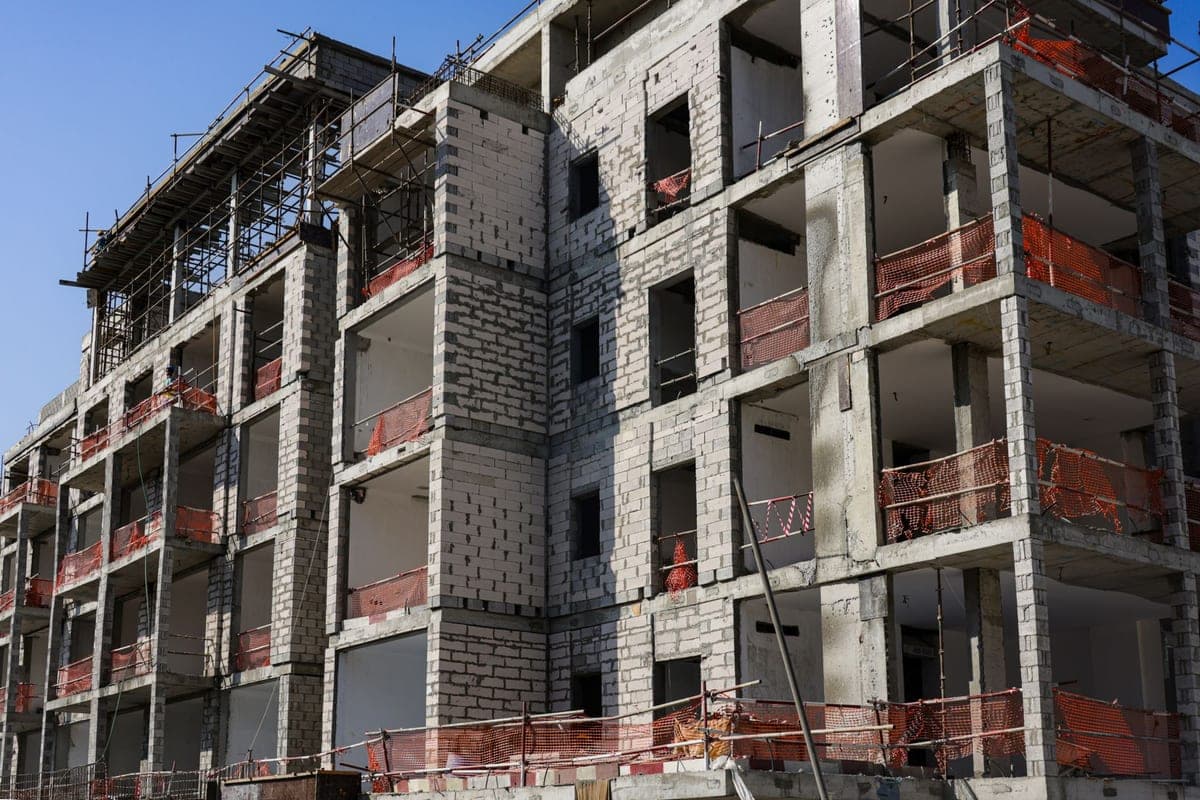
A couple in Bengaluru booked a two-bedroom flat in a project off Sarjapur Road in 2021. Possession was promised in 2023. It is now 2026, the structure is half-built, the developer has stopped answering calls, and the marketing office is shut. They are paying a home-loan EMI on a flat they cannot occupy and rent on the one they live in. They have read that other buyers 'took the builder to NCLT'. They want to know whether they can do the same — and whether it will get them their flat or their money back.
It is a fair question with a layered answer. Homebuyers can, in defined circumstances, drag a defaulting developer into insolvency before the National Company Law Tribunal. But the route is narrower, slower and more collective than most buyers assume, and for many it is the wrong tool. What follows is how Section 7 of the Insolvency and Bankruptcy Code actually works for an allottee, and when it is — and is not — the right move.
Homebuyers are financial creditors — but that is only the starting point
Until 2018, a homebuyer who had paid a developer was neither a financial creditor nor an operational creditor under the IBC — they sat in a gap, with no standing to initiate insolvency. The 2018 amendment closed that gap. An explanation inserted into Section 5(8)(f) deemed amounts raised from allottees under a real estate project to have 'the commercial effect of a borrowing', which makes the allottee a financial creditor. The Supreme Court upheld that amendment in Pioneer Urban Land & Infrastructure Ltd v. Union of India (2019), confirming that homebuyers can both trigger a Section 7 petition and sit on the committee of creditors.
Being a financial creditor is what gives an allottee the door key to NCLT. It is not, by itself, what gets the door open. Two further filters — a numerical threshold and a 'genuine insolvency, not recovery' principle — decide whether a Section 7 petition will actually be admitted.
The 100-or-10% threshold: you cannot file alone
A single aggrieved buyer cannot file a Section 7 petition against a developer. The 2020 amendment added a proviso to Section 7(1) requiring that an application by allottees be filed jointly by not less than 100 allottees of the same real estate project, or not less than 10% of the total allottees of that project, whichever is fewer. The Supreme Court upheld this threshold in Manish Kumar v. Union of India (2021), reasoning that one buyer should not be able to push an entire project — and hundreds of other buyers — into insolvency over an individual grievance.
The practical consequence is that a Section 7 petition is an organising exercise before it is a legal one. The couple off Sarjapur Road cannot act alone; they need to find and align with enough fellow allottees in the same project to clear the threshold, agree on counsel, and file together. That coordination — assembling the buyer group, collecting allotment letters and payment proofs, and reconciling who wants their flat versus who wants a refund — is usually the hardest part, and it is where buyer groups most often stall before a petition is ever drafted.
RERA is the primary forum; insolvency is the last resort
Discuss the procedure and timelines.
Insolvency and oppression-and-mismanagement matters run on strict statutory timelines and thresholds. WhatsApp a short description of the dispute or filing and we will explain the procedure that applies.
How our nclt / nclat worksThe IBC is an insolvency-resolution statute, not a recovery mechanism — a distinction the Supreme Court has drawn repeatedly. For homebuyers, recent rulings have pushed that distinction further: the Court has signalled that RERA should be the primary forum for buyer grievances against a delayed project, with insolvency reserved for cases of genuine developer insolvency rather than as a pressure tactic to extract a refund from a developer who is otherwise solvent and capable of completing the project.
That does not make the remedies mutually exclusive. RERA itself states that its remedies are in addition to, and not in derogation of, other laws (Sections 88 and 89), and the courts have treated RERA, consumer fora and the IBC as concurrent rather than alternative. The NCLT has held that a pending RERA proceeding does not, by itself, bar a homebuyer from filing a Section 7 petition. But the direction of travel is clear: where the project can realistically be completed and the developer is not insolvent, RERA — with its powers to order completion, refund with interest, or compensation under Section 18 — is usually both faster and better matched to what a buyer actually wants.
The speculative-investor trap
Not every person who paid the developer counts as a protected allottee for Section 7 purposes. The courts have distinguished a homebuyer who intends to take possession and live in or hold the flat from a speculative investor who bought purely for financial return. Where the agreement carries a buy-back clause, an assured or fixed return, or a guaranteed-appreciation arrangement, that signals an investment motive rather than an intent to acquire a home — and such an investor may not be able to trigger CIRP under Section 7. Their remedy lies in RERA or the consumer fora instead.
For a buyer assembling a Section 7 group, this matters at two levels: each member should be a genuine allottee to count cleanly toward the threshold, and the documentation should reflect a real intent to take possession. If a significant part of the group turns out to be assured-return investors, both the headcount and the maintainability of the petition can be challenged at admission.
What admission actually does to the project
If NCLT admits the petition, a moratorium under Section 14 takes effect immediately — no suits, no enforcement, no transfer of the company's assets. An interim resolution professional displaces the developer's management and takes control of the corporate debtor. The homebuyers form a class of financial creditors within the committee of creditors and vote through an authorised representative rather than individually. The corporate insolvency resolution process then runs to a statutory outer limit of 330 days, ending in either an approved resolution plan or liquidation.
For homebuyers, the outcome on which that bet turns is which of those two it ends in. A resolution plan — typically a new developer taking over and completing the project — can deliver the flat or a structured settlement. Liquidation is usually the worse result for buyers, who rank below secured financial creditors in the waterfall and may recover only a fraction of what they paid. The 2025 IBBI regulatory amendments have improved the position somewhat — including a mechanism for the resolution professional to hand over possession of completed units during the CIRP with the committee's approval, and facilitators to represent sub-classes of homebuyers — but admission remains a process whose end state you do not control once it begins.
When Section 7 is the right call — and when it is not
The honest framing is that insolvency suits a narrow band of cases. It tends to be the right instrument where the developer is genuinely insolvent or has abandoned the project, where a sufficient and committed buyer group exists to clear the threshold and see the process through, and where RERA orders have already proved unenforceable because there is no solvent entity to enforce them against.
- Consider Section 7 when: the developer is genuinely insolvent or has walked away, you can assemble 100 allottees or 10% of the project, and RERA relief has been ordered but cannot be realised
- Prefer RERA when: the project is capable of completion, the developer is solvent, or you primarily want possession, a refund with interest, or compensation under Section 18
- Be cautious when: a large part of your prospective group holds assured-return or buy-back agreements, or when insolvency is being floated mainly as leverage for a refund — NCLT is increasingly alert to that and may decline admission
Which forum fits depends on the specific project, the developer's financial state, the terms of your allotment, and what you actually want out of it — possession, refund, or compensation. Those facts change the answer, and they are worth working through before you commit to a route or sign on to a buyer group.
Discuss the procedure and timelines.
Insolvency and oppression-and-mismanagement matters run on strict statutory timelines and thresholds. WhatsApp a short description of the dispute or filing and we will explain the procedure that applies.