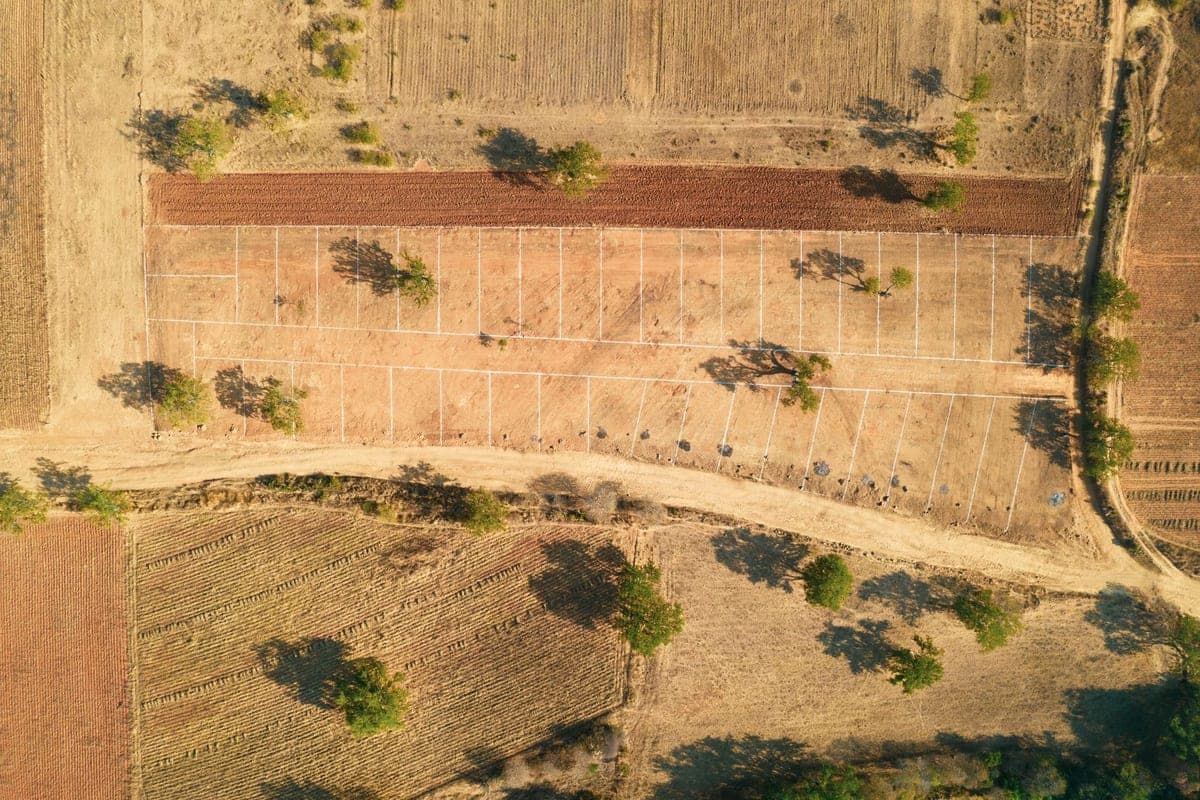
Ask a landowner in Devanahalli or Nelamangala what DC conversion costs, and the answer is usually a number picked up from a broker's WhatsApp forward. The conversion fee itself is one line in the actual bill. Zone, purpose, extent, and whether the land carries any prior non-agricultural use before the order was obtained all change the final figure.
What 'DC conversion charges' actually covers
The phrase covers at least three separate government charges, not one. The conversion fee payable under Section 95 of the Karnataka Land Revenue Act, 1964 is the base cost. A penalty applies if the land was already put to non-agricultural use before the order was obtained, and a betterment or infrastructure charge may apply separately at the layout stage. Treating all of this as a single 'conversion charge' is the most common budgeting mistake we see.
Search results for 'conversion charges Bangalore' also surface pages about B Khata to A Khata conversion — a municipal fee charged by BBMP or the relevant urban local body to regularise the khata record of an already-built property. That is a different transaction, under a different authority, at a different office. DC conversion under Section 95 concerns changing agricultural land into non-agricultural land before construction. Khata conversion concerns the municipal tax record of a property that is often already built. Do not let a broker quote you one figure while meaning the other.
Conversion charges under Section 95 of the Karnataka Land Revenue Act, 1964
Section 95 of the Karnataka Land Revenue Act, 1964 empowers the State to permit conversion of agricultural land to non-agricultural use, and to prescribe the fee payable for that permission. The Deputy Commissioner of the district — Bangalore Urban or Bangalore Rural, for most sites near the city — grants the order. The fee is not decided case by case. It is fixed by government notification, revised periodically, and applied uniformly to applications in the same zone and category.
This matters at the budgeting stage because two neighbouring plots converted a year apart can carry different fee rates if the schedule was revised in between. The rate applied is the one in force on the date of application, not the date the land was purchased or the date a broker last quoted a figure.
DC conversion fees in Karnataka: how the rate is structured
Get an independent legal opinion before you commit any money.
A clean-looking document can still hide a broken title chain, an undisclosed encumbrance or a defective approval. Send the documents you have over WhatsApp and we will tell you what is missing and what is concerning before you proceed.
How our property document verification worksThe fee is levied per unit of land area — historically expressed as a rate per cent, one-hundredth of an acre — and it moves along two axes: the proposed use, and the zone the land falls in.
- Purpose: residential conversion is charged at the lowest rate, commercial conversion at roughly double the residential rate, and industrial conversion follows a separate schedule tied to KSIIDC and the State's industrial-area notifications
- Zone: land within 12 km of a City Corporation limit attracts the highest rate, land near a Taluk centre an intermediate rate, and rural land away from both the lowest rate
- The same extent can attract a materially different fee depending on which zone band it falls in — confirm the applicable zone for your survey number before estimating anything
Section 95 sets no minimum extent for a conversion order — see our note on the minimum land required for DC conversion in Karnataka — but the fee schedule above applies whatever the size of the parcel, down to a single small site.
DC conversion fees calculation: a worked example
The figures below are indicative only, drawn from the residential rate band published for land within 12 km of a City Corporation limit. Rates are revised by government order — confirm the current notified figure on the Bhoomi portal (landrecords.karnataka.gov.in) or with the jurisdictional DC office before you budget against them.
On that indicative schedule, the residential conversion fee within a City Corporation radius runs in the order of a few hundred rupees per cent. A one-acre parcel, at 100 cents, works out to a conversion fee in the order of ₹30,000, before any penalty, NOC costs or betterment charge is added. A small residential site of a few cents converts for a proportionally small fraction of that figure. Commercial conversion in the same zone is charged at roughly double the residential rate.
The penalty — a separate charge many owners don't expect
Where agricultural land was already put to non-agricultural use — construction, a shed, a commercial structure — before the conversion order was obtained, the DC's office levies a penalty in addition to the conversion fee. It is charged per square foot of the built-up or non-agricultural area, on the same three-tier zone structure as the fee itself. On sites already partly built without conversion, a common situation on the Bangalore periphery, the penalty component is often larger than the conversion fee.
Betterment charges, NOCs and the other costs on the bill
The conversion fee and the penalty are the DC office's charges. They are not the only cost of getting a site conversion-ready.
- Betterment or infrastructure charge — levied separately by BDA, BMRDA or the local planning authority in some zones, tied to the layout or building-plan stage rather than the conversion order itself
- NOC processing fees — the panchayat, KSPCB, Aerodrome Authority or BESCOM may charge separately for the NOCs the conversion application requires
- Survey and measurement charges, where the tippani or survey sketch needs updating before the application is filed
- Stamp paper and application fees at the DC office — nominal compared to the fee and penalty above, but part of the total
Where to verify the current rate before you budget
Fee schedules under Section 95 are revised by government order, not on a fixed annual cycle. The figures in this article are indicative and can be out of date by the time you read it. Check the current conversion-fee schedule on the Bhoomi portal and confirm the applicable rate with the jurisdictional DC office before relying on any number, including the ones here.
Legal fees are separate from the government charge
Everything above is a government levy, payable to the State exchequer, not to your advocate. Legal fees for preparing the application, compiling the title chain, and taking the file through the Tahsildar's and Assistant Commissioner's scrutiny are a separate, professional cost, confirmed on enquiry. Ask for both figures in writing before you commit to a purchase.
If you are evaluating a plot that needs DC conversion, or reviewing a conversion order and fee receipt already on file, send the documents over WhatsApp at +91 63637 45780 for a confidential review before you sign anything or pay the DC office.
Get an independent legal opinion before you commit any money.
A clean-looking document can still hide a broken title chain, an undisclosed encumbrance or a defective approval. Send the documents you have over WhatsApp and we will tell you what is missing and what is concerning before you proceed.